Ease Acoustic Software Cracked

Ease Acoustic Software Cracks For Free Since many people have questioned why there is no sequencer in the Yamaha Montage I thought it would be an idea to ask Yamaha directly and see what their thinking was. EASE software was developed by some German acoustical engineers, Acoustic Design Ahnert, approximately 15 years ago. There really was no other software out there that focused on acoustical analysis. A few years after EASE was developed another software with similar capabilities called Ulysses was released by IFBsoft also in Germany, but it was.
I can't say I've ever used CadnaR (plenty CadnaA experience. But that's besides the point!) so I'm no authority, but as I understand it, this is a bit more simplistic compared to the others and normally used for internal industrial noise modelling. The other two I use a fair amount each!
Odeon is a more powerful and efficient tool for ray tracing calculations and analysis in my opinion. This is the tool I would use for traditional room acoustics models, to determine things like RT or SPL transfer between spaces. It also has some useful tools like reflector analysis, if you're looking at bolstering STI with early reflections from a stage position for example. Odeon will also allow you to set up surfaces to have sound transmission, either by way of a transparency coefficient, or a full spectrum of R values. As for EASE, this is a much more powerful tool for PA/VA or loudspeaker layout designs where you're looking at specific products. For a start, most loudspeaker manufacturers accept this as the impartial industry standard and will almost always have EASE data for their loudspeakers, usually available simply from their websites (or sometimes just a quick tech support phone call away). (yes, Odeon has a built in library of some loudspeakers, but it's no contest on this one really) This makes it a lot easier when it comes to modelling specific loudspeaker sources in a space.
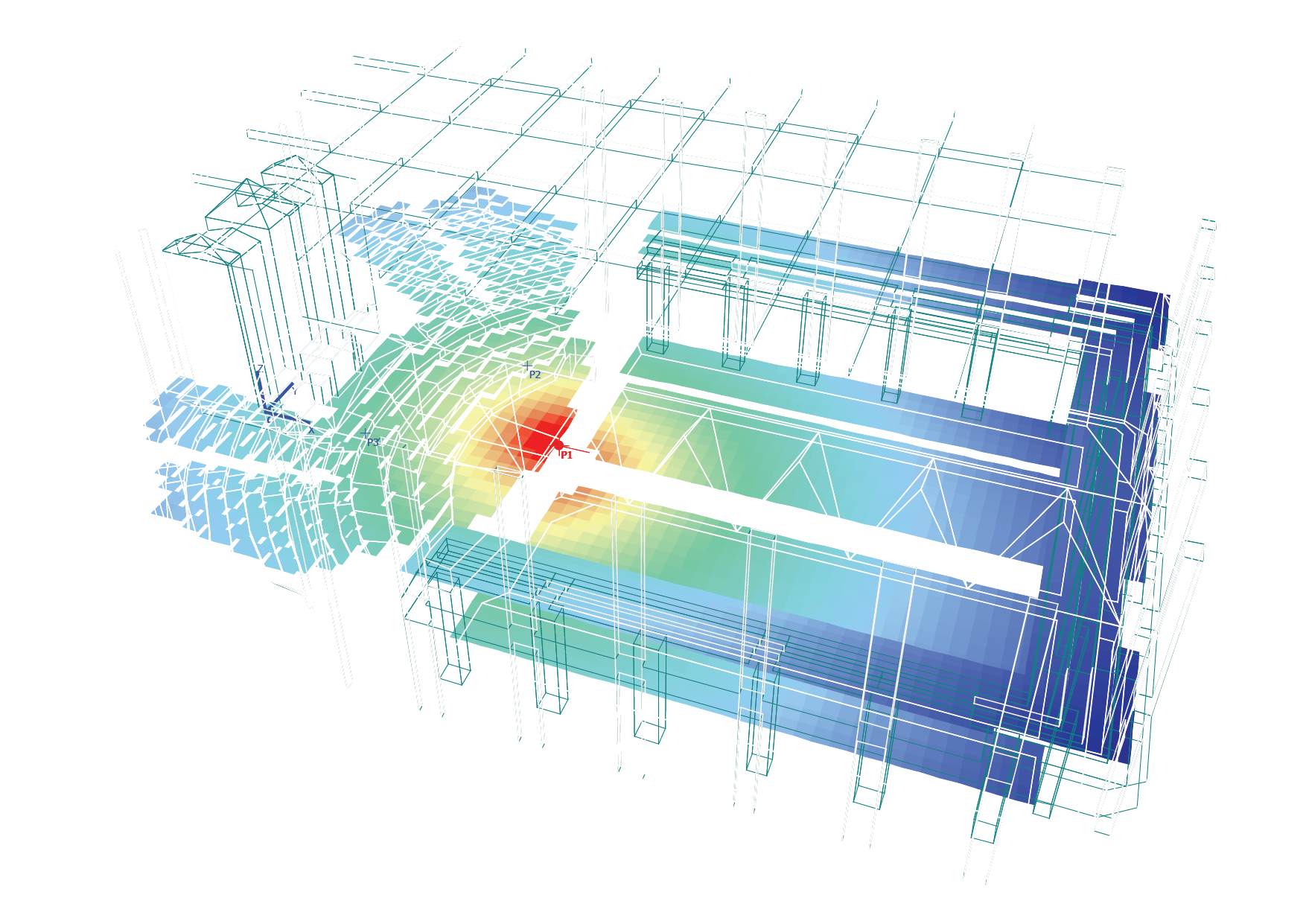
There are also more useful tools for things like setting delays, or editing loudspeaker groups together. Another consideration is ease of use / learning curve. For this I will just say that Odeon seems a lot more user friendly to me. I would advise that it's likely a lot easier to learn Odeon from scratch than EASE. But neither are too bad, and both have very good and friendly support (and in the case of EASE an online community forum for help!) Something I will also mention is geometry generation. For both cases it's a pain to do within the software, you'll definitely want to get SketchUp or something for making the geometry itself.
Contoh format laporan kegiatan tunjangan kinerja guru 2018 mts - berikut ini adalah contoh format laporan kegiatan tunjangan kinerja guru 2018 mts yang bisa anda download secara gratis di website kami. Nilai k 13 sd contoh format dan pengisian jurnal guru mata pelajaran matematika contoh format supervisi guru smp. Soal matematika tentang. Contoh laporan supervisi guru sd april 2018 download.
Both programs will accept externally made geometry, Odeon through a SketchUp plugin to export in the correct format, and EASE through a built in import module within the program itself. What's nice is that you can set your material groupings using the SketchUp material paintbucket, which saves a LOT of time for complex models.
How complex is Odeon to use? I've got basic room acoustics knowledge through being a mechanical engineer and having worked with acoustic products in projects over 10 years, but never really done in depth analysis.
I've used basic programmes where you can model a room and add surface absorption from databases and get a rough but fairly believable simulation of the expected reverberation time in the room. Add more absorbers or change surfaces form for example wood to concrete and see how it differs. Would you need in depth acoustic education or is it usable from novice to expert? ( I guess I'll check youtube for info too) Edit: Looked quite understandable, and pricey:) • • • • •.
Our company is focused on providing innovative and reliable software solutions in the security field. Established in 2005, our company has solid experience in the development and support of security solutions for professional and private use. Firstly released in 2012, BitCrypter has become rapidly quite popular among software developers and users trying to protect programs. Exe binder fud.
Electronic and Acoustic System Evaluation and Response Analysis EASERA is the unrivaled solution for electronic and acoustic analysis with industry standard quality and incredible flexibility and power. EASERA consists of four logical parts: • Signal generator • Measurement • Real time analyser • Post processing EASERA provides both data acquisition with a variety of stimulus signals including Time Delay Spectrometry, sweeps MLS or noise excitation signals and a post processing engine to calculate all acoustic functions or measures according to ISO Standard 3382 and higher. The real time analyser provides multiple ways to perform a fast onsite analysis or to obtain a precise view of the surrounding acoustic environment. Although many of these tools are available in one form or another in several products, EASERA is the first to bring them all together in one unified measuring package. EASERA can be run on Microsoft Windows XP or higher and in conjunction with nearly every modern measurement interface.