Orion Astro 2 0 Seriali

Now is the perfect time to look for the Orion Nebula in Orion the Hunter. The constellation comes into good view around 8 p.m. Local time in the southeastern sky, similar to the view in this photo, and remains well-placed through 1 a.m. Orion stands highest around 11 p.m. Stellarium No moon. A perfect time to look at the. It’s easy to find.
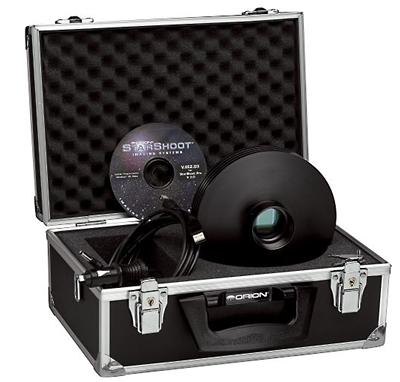
Orion StarShoot All-In-One Astro-Camera. Can i use windows 8 64 bit operating with this camera. According to Orion, this camera requires a PC running Windows XP, Vista, 7 or 8, so it should work with Windows 8 64 bit.
Face southeast around 7 o’clock and look for three bright stars in a close-set row not quite vertical to the horizon. That’s Orion’s belt.
Look two fingers to the lower right of the lowest belt star for a smaller, slanted group of three fainter stars. This is Orion’s sword. If you now use your peripheral vision on the sword stars — looking around them instead of directly at them — you should be able to coax a fuzzy patch into view.
The Orion Nebula or M42 is just below Orion’s Belt (top) in the middle of his “sword”. In a time exposure it looks pink, but through binoculars it appears as gray, misty patch dotted with several stars. Bob King That whiff of insubstantial haze is the Orion Nebula, one of the closest and largest stellar nurseries in the galaxy. Directory snoop 5 01 crack cocaine video. The massive cloud of gas and dust spans 24 light years across, almost the same distance as that between Earth the star Vega. Buried within its steamy swirls and foggy folds are thousands of newborn stars, the brightest of which excite the gas to glow.
Binoculars will show the nebula more clearly and also reveal several little stars within and without the cloud. From a dark sky I can clearly it fan or flower-like shape, brighter at the top and fainter at the bottom, in the same field of view with dozens of additional stellar diamonds. The sight is one of the most beautiful in the sky. Amazing what just a telephoto lens can do.
This closeup of Orion’s sword and nebula was taken with a 200mm lens on a tracking mount. Visible within the nebula are the brighter Huygenian Region, the dark Fish’s Mouth and the pale pink outer tendrils.
The nebula lies 1,344 light years from Earth. Bob King A 4-inch telescope will lots of structure that includes extended arms of nebulosity and the brighter, pale interior part called the Huygenian Region, named for Dutch astronomer, who made the first detailed sketch of the nebula. The Huygenian Region appears pale green (from excited oxygen atoms) in even a 4-inch scope, but you’ll need at least an 8-inch telescope to discern the delicate pink hues of the outer nebula. A dark thumb of nebulosity called the Fish’s Mouth stands silhouetted in front of the brightest part of the Orion Nebula. It’s easily visible in the telephoto lens photo and in small scopes.
It’s made of the same material as the bright nebula but appears dark because we see it in silhouette. This rough sketch of the Orion Nebula at low magnification (64x) through a 15-inch telescope shows the different color hues, the green Huygenian Region and the Trapezium — the four stars in a small trapezoid at center. Bob King At its core, a foursome of young, extremely hot stars known as the flood the gases with ultraviolet light causing them to fluoresce in pale hues of green and pink. Soak in the view of the Trapezium if you’ve never seen it before — they’ve only been around for about 300,000 years. That’s incredibly young compared to just about every other star visible with the naked eye on the clearest night. These and the thousands of other stars hidden within the nebula were and still are being created when clumps of gas and dust contract under the force of gravity. If stars were chicks, it’s all peep-peep-peep here.
This close-up in the heart of the Orion Nebula made in infrared light shows just how rich the region is in infant stars. Al If there are so many stars, why do we see only a handful through our telescopes? Most are newborns and shrouded within their dusty birth cocoons called globules. To see them astronomers employ instruments like NASA’s and the European Space Agency’s. The two orbiting observatories gaze at the universe through infrared-sensitive eyes.
Lies just beyond the red end of the rainbow spectrum. Though invisible to our eyes, we sense it as heat. Because infrared can penetrate dust and gas with relative ease, Spitzer and Herschel can see inside Orion’s clouds and spy stars in the earliest stages of firing up as feisty newborns. The Orion Nebula in its full glory seen with the Hubble Space Telescope.