Carman Scan 1 Software Cardinality Of Sets
View and Compare Your Scanner Options Carman, Henderson County, Illinois Fire Police EMS Scanners. Click here for details, software, accessories and to purchase without programming. Scanner Price: $129.95. Have us custom program this scanner for your 1 county for an additional $30. Cardinality is important. The cardinality of an index is the number of unique values within it. Your database table may have a billion rows in it, but if it only has 8 unique values among those rows, your cardinality is very low. A low cardinality index is not a major efficiency gain. Most SQL indexes are binary search trees (B-Trees).
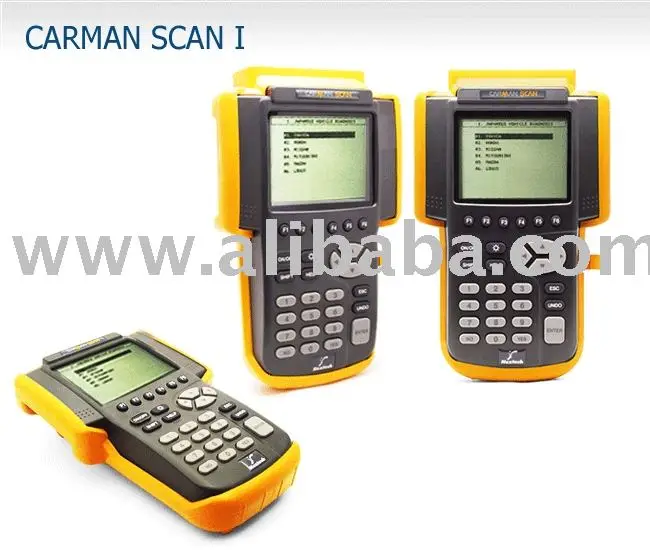
• > • > • > • Carman Scan Carman Scan Software Updates Carman Scan Software Updates Please note that we are no longer able to offer Carman Scan Software updates. Most products are noe obsolete, including the Lite, VG64, AT and older models. G-Scan Tab Trade In Trade-in Value of £100. Purchase price only £795. Trade in your old Carman Scan tester for the new G-Scan Tab. The G-scan Tab is the latest in a series of high quality diagnostic tools including the G-scan and the G-scan 2. The G-scan Tab builds on the high quality features and applications of the previous products and takes the G-scan Tab to new heights with new features and all at a lower hardware cost.
The G-scan products have led the market in Asian vehicle diagnostics for many years offering OEM software for Kia and Hyundai, as well as outstanding depth and breadth of software in all other manufacturers. Acceptable Trade-ins Any Carman Scan model, any Launch model, Hanatech, AD200, AD300 or any professional version Autel.
Contact us on 31 to order and for more details.

The cardinality of a collection A (which might be an ordered or unordered list, a set, or what not) is basically the number of unique values in A. For example, the collections [1,2,3,4] and [1,2,1,3,1,4,3] have the same cardinality of 4 (and also correspond to the same set). Determing the Cardinality of a Collection: The Naive Approach Consider a collection A=[1,2,1,3,1,4,3]. How can we systematically determine the cardinality of A? Well, here are two of many ways to do this: • First sort A in ascending order. Then, we can perform a linear scan on A to remove duplicates. It’s pretty easy to see how this can be done.
Banyak sekali yang mencari crack windows 8, crack 8 pro dan ent, crack yang 100% berhasil, crack windows 8 terbaru, terupdate, crack terbaik, tool aktivasi Windows 8 Pro build 9200 dan lainnya. Cara melihat kode aktivasi software trial. Ya karena cara aktivasi Windows 8 tidak perlu Software Krek-Krekan karena anda sudah membayar lisensinya ^_^.
Unfortunately I have a terrible memory and instantly forgot both the title and the author, and have just spent a full 2 hours trying to track it down on the internet with such vague searches as 'Chilean author writes about American university.' Donde van a morir los elefantes jose donoso pdf download. I read this book right before moving to Chile and for some reason certain elements of it have stayed with me. Now that I've found it, I hope I can You know those books that you didn't even necessarily like but can't stop thinking about for years afterward? Unfortunately I have a terrible memory and instantly forgot both the title and the author, and have just spent a full 2 hours trying to track it down on the internet with such vague searches as 'Chilean author writes about American university.'
Finally, return the size of the possibly trickled-down collection (now a set) obtained. If the initial size of A is. Then, the cardinality of A, using this method, can be determined in (if we use merge-sort) time and extra space.
• Use a hash table: Perform a linear scan of A, hashing the values of A. It’s easy to see that cardinality of A is the number of keys in the hash table obtained. This uses time but extra space also. Notice that we can’t do any better (lower upper-bound) than because we have to look at the entire input (which is of size ). But can we determine the cardinality of A in time using sub-linear space (using strictly smaller space than )? That’s where probability comes in. Linear Probabilistic Counting This is a probabilistic algorithm for counting the number of unique values in a collection. It produces an estimation with an arbitrary accuracy that can be pre-specified by the user using only a small amount of space that can also be pre-specified. The accuracy of linear counting depends on the load factor (think hash tables) which is the number of unique values in the collection divided by the size of the collection.
The larger the load factor, the less accurate the result of the linear probabilistic counter. Correspondingly, the smaller the load factor, the more accurate the result. Nevertheless, load factors much higher than 1 (e.g. 16) can be used while achieving high accuracy in cardinality estimation (e.g.